

Free educational guide
Stiff from sitting? Try this 7-minute desk mobility routine
A breath-led sequence for people who work at a laptop. Steps 1–3 free on this page — enter your email to unlock steps 4–8 and download the PDF here (no emails from us).
- ~7–10 minutes
- Open the front
- No equipment
- Not medical advice
The idea
A useful flip: don’t only stretch your neck
After hours at a laptop, a lot of people go straight to yanking on the neck and upper traps. Those areas can feel tight — and they often carry a lot of load — while the front (chest and front of the shoulders) is frequently the restricted side.
Often restricted
Front of chest & shoulders
Screen habits that pull the head and shoulders forward are commonly linked with shorter tissue in the front of the shoulders and chest. 1
That’s a general desk pattern, not a diagnosis of your body. Individuals vary. This routine de-emphasizes aggressive upper-neck stretching as the main event.
Optional
30-second self-check
Optional observation — not a medical test.
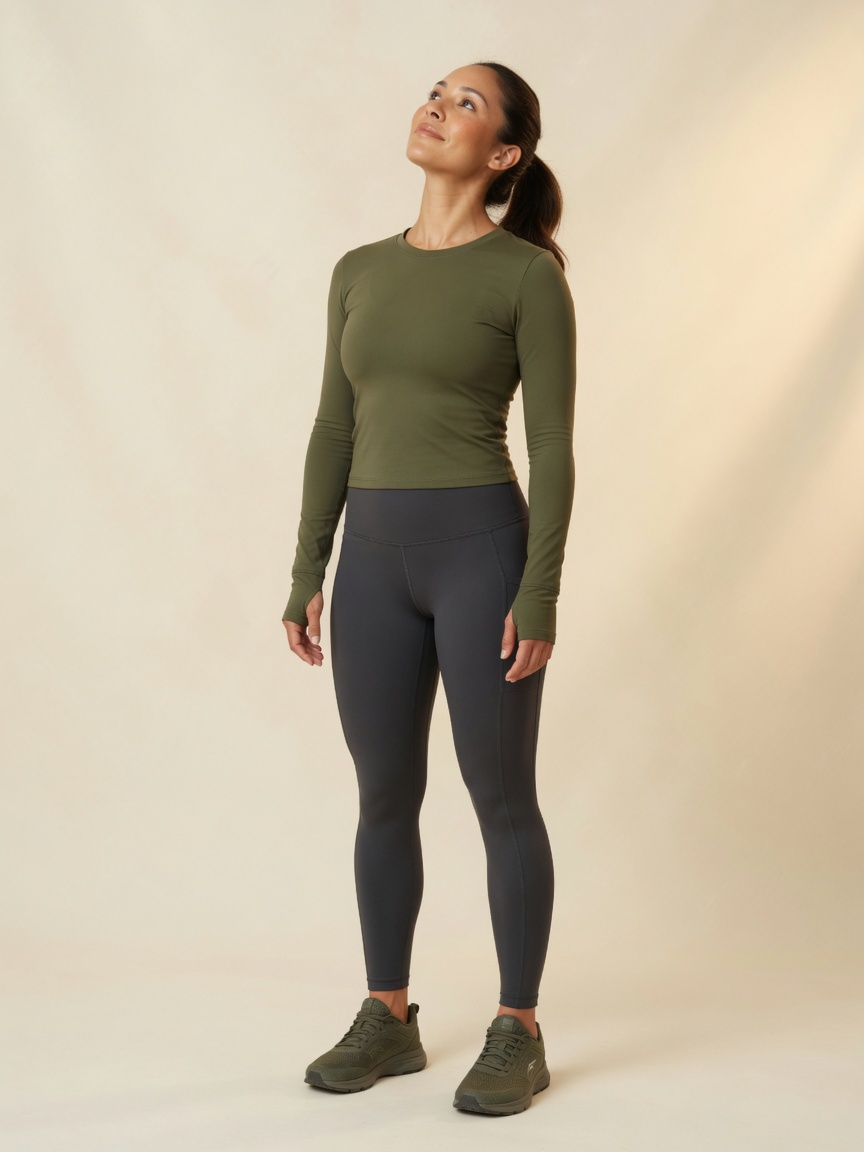
-
01
Stand or sit tall
Easy posture. Soft jaw. No force.
-
02
Look up slowly
Toward the ceiling — zero push. Stop at strain.
-
03
Notice the front
Restriction in throat or chest can mean the front is limited — we work that side first.
Stop if anything hurts. Sharp pain, dizziness, numbness, or known injury? Skip this and talk with a qualified professional.
The method
Breath first (and last)
Slow, deliberate breathing is how we practice every stretch. Calm counted breaths are a simple way many people settle the body — we use a similar pace while moving. 4
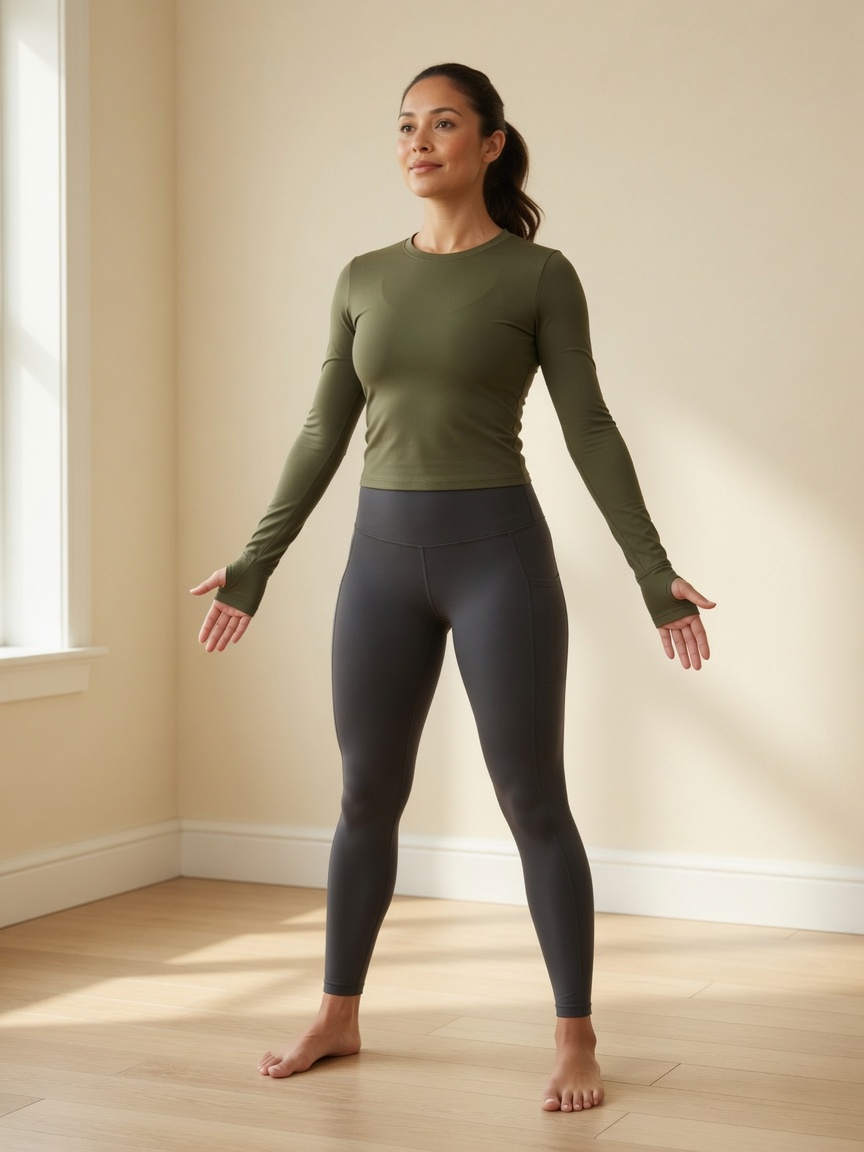
Warm-up & cool-down · 4 rounds
Palms forward
- Stand easy, palms facing forward.
- In ~4s: belly first, then chest.
- Soft hold ~5s at the top.
- Out nose ~4s — empty without strain.
- 1s pause. Repeat ×4.
During stretches
4 · 1 · 4 · 1 cycle
On the inhale, gently meet the stretch. On the exhale, relax into available range. If breathing is hard, you’re pushing too far.
Steps 1–3 free
The routine — free preview
Steps 1–3 open. Full plan (steps 4–8) + PDF download unlocks with your email. 5
3 of 8 free
-
01 ~1 min · 4 rounds
Standing breath — palms forward
Warm-up: in 4s (belly then chest), soft hold 5s, out nose 4s. Four rounds.
Feel where: ribs and chest expanding without shrug.
-
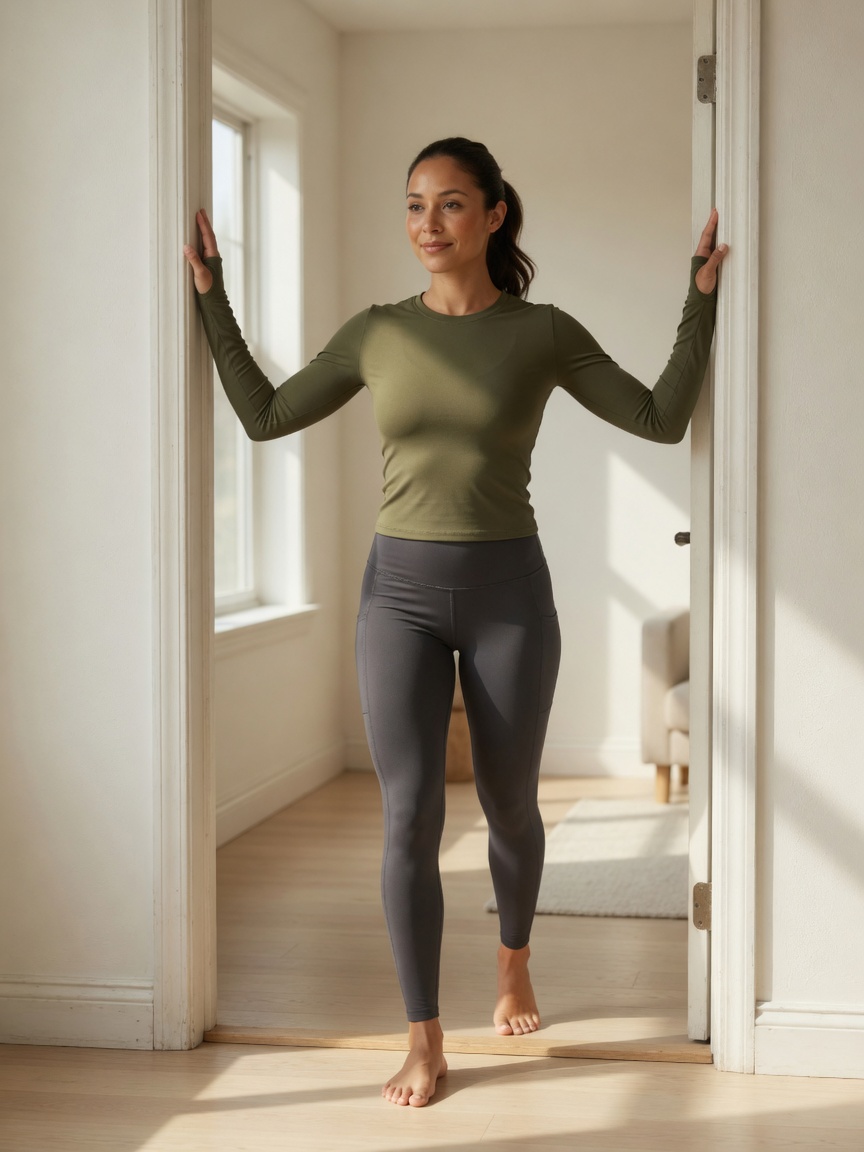 02 ~60–90s
Chest opener (doorway or clasped hands)
Doorway: forearms on the frame, one foot forward, gently lean until you feel the front of the chest/shoulders. Or clasp hands behind you and lift slightly while lifting the chest. Use the 4·1·4·1 breath.
Feel where: front of chest and shoulders — never sharp pain.
-
03 ~45–60s · very gentle
Soft front opening (optional)
From easy upright posture, allow a tiny lift of the chin only if 100% comfortable — or stay tall with palms forward and breathe into the front of the neck/chest. No forcing the ceiling look.
Feel where: gentle length in the front — stop at the first strain.
Free download · email to unlock
Unlock steps 4–8 + download the PDF
You’ve got the free preview (breath + steps 1–3). Add your email to unlock the rest on this page and download the Desk Mobility Plan PDF instantly — we do not email you anything.
- Steps 4–8 on this page: thoracic, hip flexor, lower-trap Y, fold, cool-down
- PDF download here: full breath protocol, self-check, safety notes
- No inbox: no PDF email, no promos, no newsletters
100% free
No emails from us
Instant download
Education only
Still inside
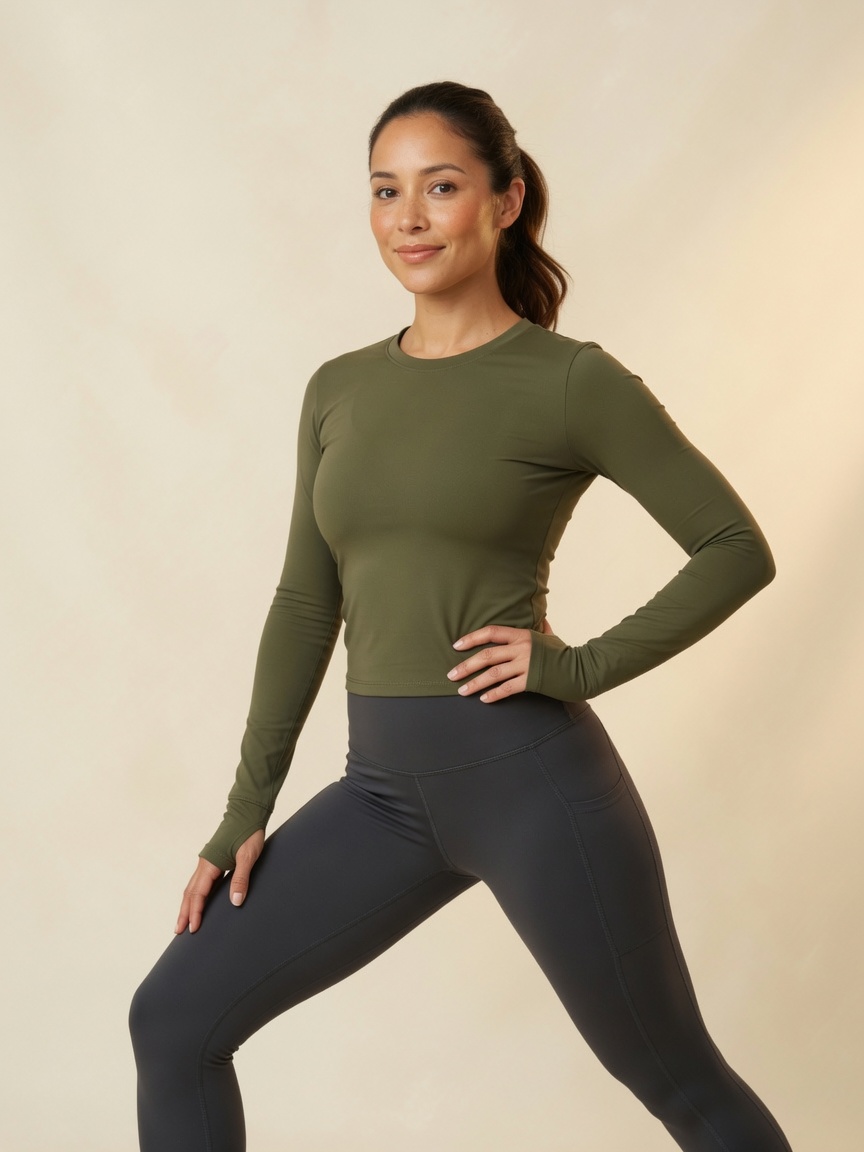
04 · Thoracic rotation Undo desk rounding
05 · Hip flexor stretch For long sitters
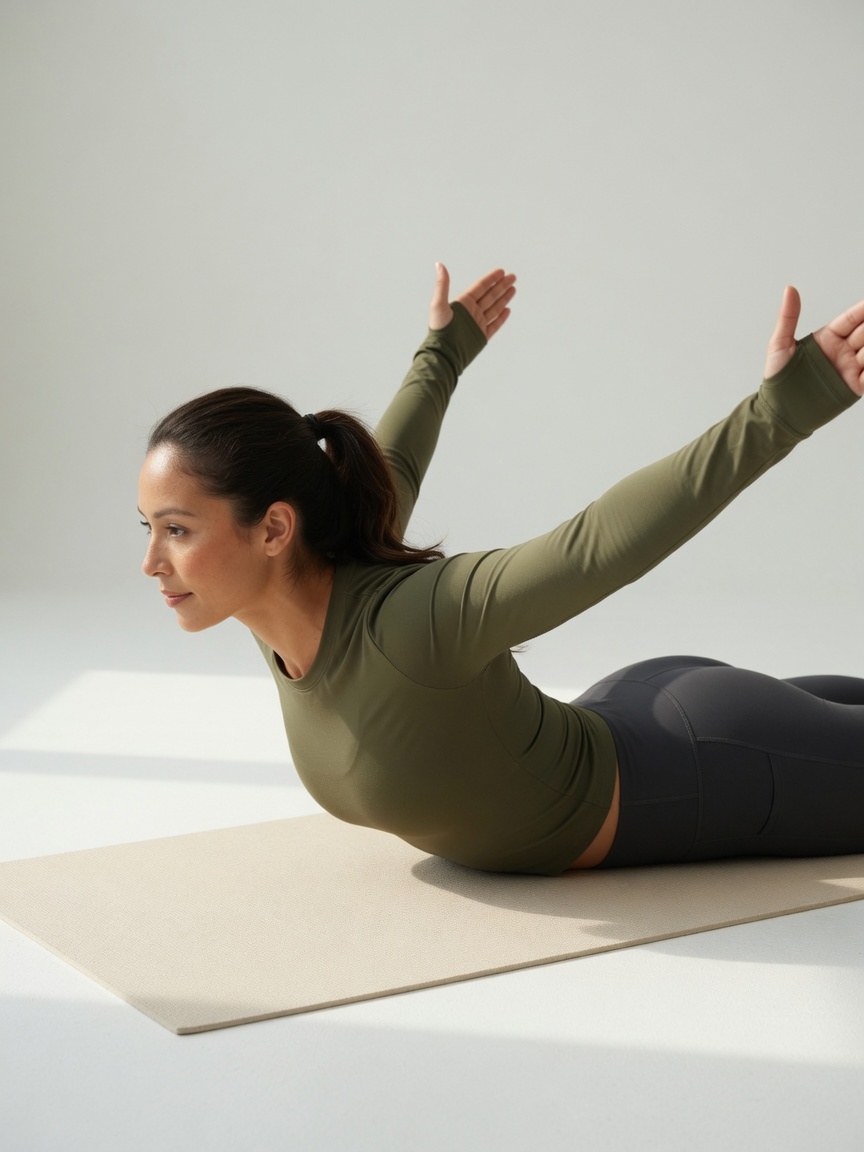
06 · Lower-trap prone Y Support, not shrug
07–08 · Fold + cool-down Close the loop
You’re unlocked
Download starts on this page (nothing sent to your inbox). Steps 4–8 are open below.
If the file doesn’t appear, use Download again. We never email the file. Soft range only — stop if anything hurts.
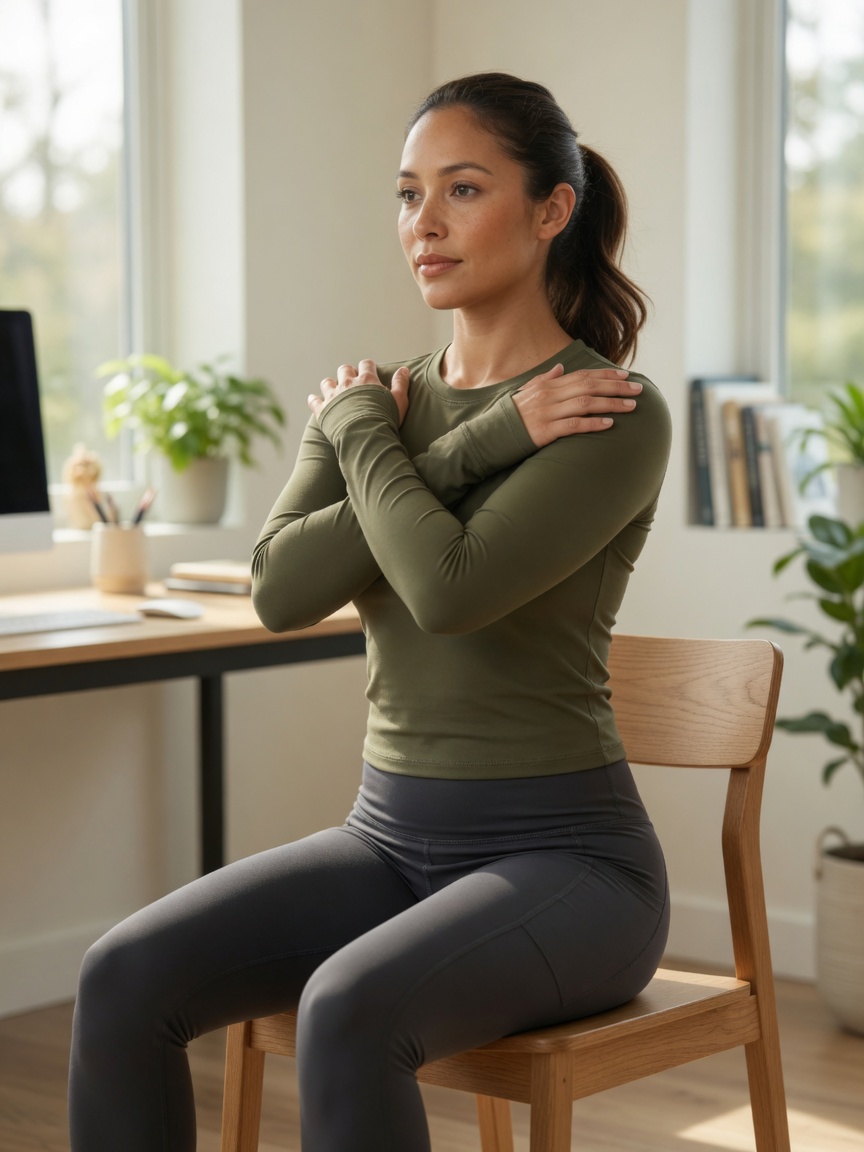
How to use it
What we intentionally don’t do
- Aggressive upper-trap or neck stretching as the main event
- Chasing pain or forcing range of motion
- Claims to diagnose, treat, cure, or heal injuries
- Selling a product on this page — free educational content only
Sources
Notes
Numbered marks above link here. Publishers do not endorse DeskUnlock. Not personalized medical advice.
- 1. Is it too late to save your posture? — desk/phone habits, front of shoulders/chest vs back of shoulders; stretch + strengthen. ↩
- 2. Screen-time neck and shoulder strain — prolonged screens and head angle. 2
- 3. Correcting upper crossed syndrome — coaching model (upper traps/chest vs lower traps). Not a personal diagnosis. ↩
- 4. Six relaxation techniques — breath focus / slow deep breathing. ↩
- 5. Office stretches — desk stretches as everyday wellness. ↩
- 6. Physical activity basics for adults — move more, sit less. ↩
- 7. Guidelines on physical activity and sedentary behaviour (2020) — reduce sedentary time. ↩
Disclaimer: DeskUnlock provides educational fitness
and mobility content only. It is not medical advice,
diagnosis, or treatment. Footnotes are background reading — not proof this routine works
for you. Stop if something feels wrong. Consult a qualified professional if you have an
injury, medical condition, dizziness, numbness, or pain.